
Sex Offender Checks in Klamath County
The Oregon Sex Offender Online Search is the main public route for a Klamath County registry search. Oregon State Police, through its Sex Offender Registration Section, manages the site. It supports person, address, and map searches. The result is a public-notification tool, not a full criminal history and not a list of every Oregon registrant.
Oregon publishes Level 3 registrants on the Internet. Level 1 and Level 2 records are generally handled through more limited disclosure rules. That distinction changes how a blank result should be read. It may mean no published Level 3 entry matched the terms, but it does not prove that no one with a duty to register lives in Klamath County. Confirm urgent safety concerns with local law enforcement.
Empty Klamath Registry Results
A no-result screen is easy to overread. The official Oregon portal is deliberately narrower than the full state registration system. It also relies in part on information supplied by registrants, which can change between reports. Try spelling variants, remove extra filters, and use both the person and address routes before drawing a conclusion.
Identity needs equal care. Similar names, age, height, and other visible traits can point toward a possible match, but OSP states that positive identification requires a fingerprint or DNA comparison. A photo and address may help distinguish records. They do not replace biometric confirmation.
Note: An empty Klamath County search is not proof that a person has no Oregon registration duty.
How to Search the Oregon Registry
The Oregon registry presents three paths. Address Search measures from a selected place. Person Search uses names and local filters. Map Search lets a reader move and zoom among published locations. Start with the route that answers the safety question, then narrow broad results.
- Open the official registry and review its conditions of use before entering search terms.
- Choose Address, Person, or Map Search. For local person results, select Klamath from the county control.
- Review list and map results carefully. Narrow a search that approaches the portal's 1,000-location cap.
- Open a profile and compare its public fields. Treat it as a possible match until identity is officially confirmed.
| Search route | Field or control | Required | Format |
|---|---|---|---|
| Address | Selected address | Yes | Google autocomplete |
| Address | Radius | Yes for route | 0.5, 1, 2, or 5 miles |
| Person | Last, first, middle name | One or more criteria | Text |
| Person | City, county, ZIP code | Optional | Text and searchable county list |
| Map | Pan, zoom, and pins | No typed field | Interactive map |
Klamath County Reporting Agencies
People with Oregon reporting duties register in person with law enforcement in their county of residence. Two official Klamath County contacts appear in Oregon's registering-agency directory: the Klamath County Sheriff's Office and the Oregon State Police Klamath Falls Area Command. Call first because appointment hours and fingerprint service can vary.
Klamath County Sheriff's Office
3300 Vandenberg Road
Klamath Falls, OR 97603
541-883-5130
OSP Klamath Falls Area Command
2525 Biehn Street
Klamath Falls, OR 97601
541-883-5713
The OSP registering-agency directory shows where Oregon reporting is handled. Its local entries help a person reach the correct office instead of treating the public search portal as a reporting form.
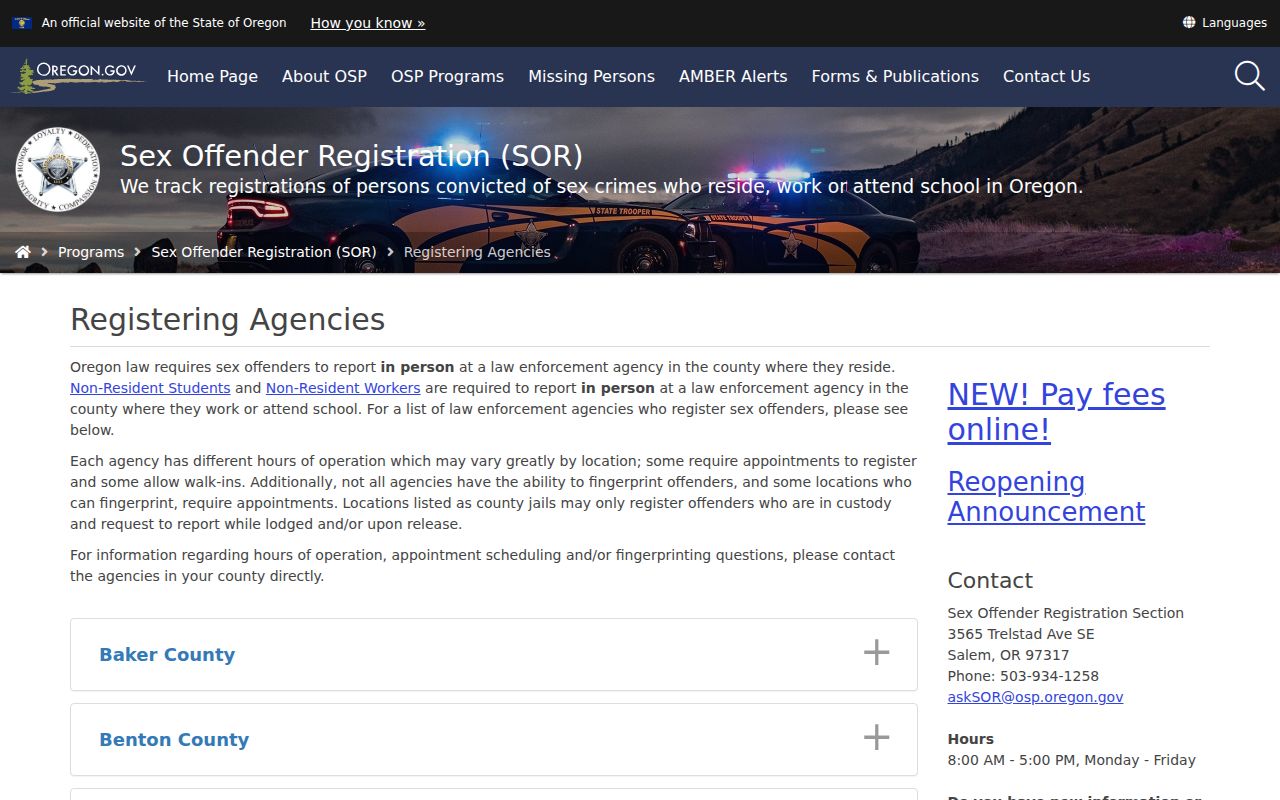
The directory screenshot reinforces the split between public online searching and in-person registration duties in Klamath County.
Central questions can also go to the OSP Sex Offender Registration Section in Salem at 503-934-1258 or askSOR@osp.oregon.gov. That office lists weekday service from 8:00 a.m. to 5:00 p.m. A person whose supervision has ended may receive a $70 annual registration invoice under ORS 163A.035. The invoice and its PIN support online payment, while mail, phone, and possible payment-plan routes are also described by the state. The fee is tied to post-supervision registration, not to use of the free public search.
Inside a Klamath Registry Profile
A published profile collects identifying and registration-related details. It does not stand in for a full Oregon criminal-history record. The offense description helps explain why the entry exists, while physical traits and aliases can help avoid a name-only mismatch.
| Name and aliases | Published identity names and alternate names associated with the record. |
|---|---|
| Photo and description | Age, photo, height, weight, hair, eyes, and visible scars, marks, tattoos, or other traits. |
| Residence | A displayed residence or the notice “No Primary Address on File.” |
| Work address | Employment location when Oregon's public-disclosure rules permit it. |
| Offense | Offense description and code tied to the registration record. |
| Status | Offender status and a control to view the available detail. |
The OSP registration hub links the search with reporting, agency, and statutory information.
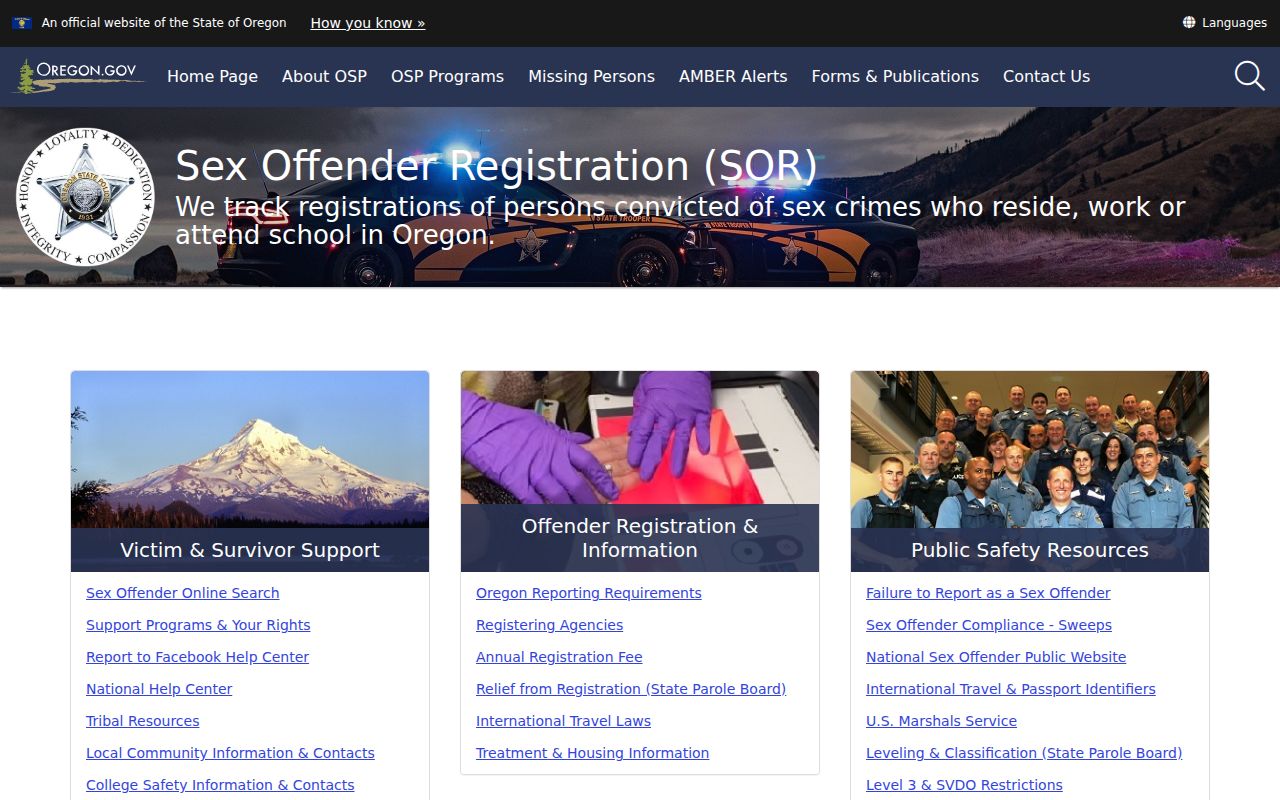
This official hub is the safer starting point when the question concerns rules rather than one public profile.
Klamath Registry Search Alerts
The Oregon portal can attach an email subscription to a completed search or to one published profile. That distinction matters. A search subscription follows changes within the chosen query, while a profile subscription follows the published data connected to that entry.
Use a tightly drawn Klamath County address radius when the goal is awareness around a home, school route, or family destination. Available distances are one-half mile, one mile, two miles, and five miles. Broader radii can produce more entries and make a changed result harder to interpret. An alert means the subscribed public data changed. It does not announce every police contact, court event, or nonpublic registration action.
Oregon Registration Levels and Requirements
Oregon uses risk levels for notification and relief decisions. Those levels should not be replaced with federal SORNA tier durations. Reporting commonly occurs within ten days of release or discharge, around the person's birthday each year, and after covered name, address, or higher-education changes. New Oregon residents generally report within ten days of moving, while international travel is reported at least 21 days before departure.
| Oregon level | Public treatment | Duration or relief |
|---|---|---|
| Level 1 | Lowest assessed risk; limited notification | Duty continues unless relief is granted; current relief route is limited to Level 1 |
| Level 2 | Moderate assessed risk; narrower discretionary disclosure | Eligible people may seek reclassification; not routinely listed on the public OSP site |
| Level 3 | Highest assessed risk; broad notification and public website listing | May support geographic, school, daycare, community, or media notice |
The official Oregon reporting information explains who reports and when.
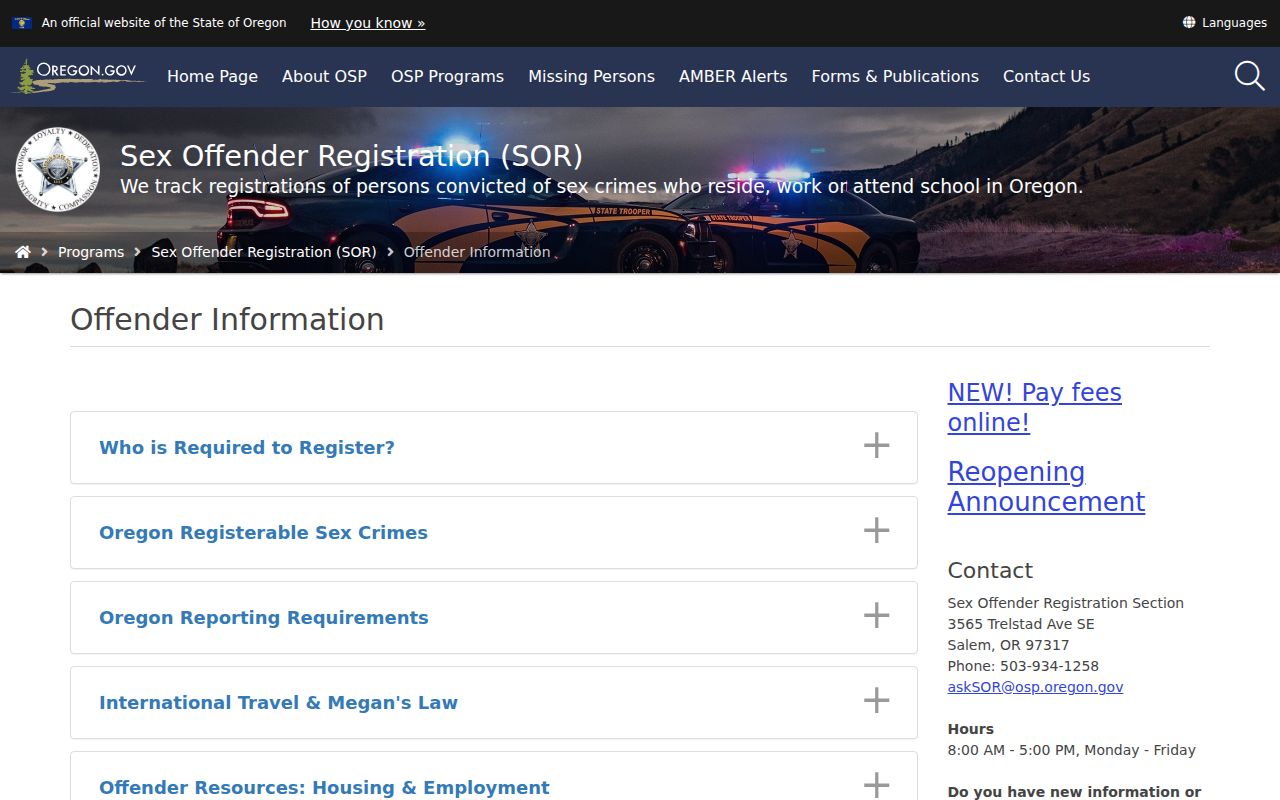
The state information helps separate ongoing reporting duties from what the Klamath County public search happens to display.
Annual birthday reporting is not the only event that can trigger a visit. A legal-name or residence change and specified higher-education changes generally carry their own ten-day window. Because vehicle and travel requirements can change, the current OSP instructions should be checked before relying on an older summary. Klamath County residents should also confirm whether the sheriff or OSP Area Command wants an appointment and whether that location can take the prints needed for the transaction.
Klamath Registration Relief Rules
Relief from Oregon reporting is separate from setting aside a criminal record. Under the current framework described by the Board, a Level 1 applicant generally must wait five years after supervision ends or the court discharges the person. Someone formerly classified at Level 2 generally faces a five-year period after reclassification. Offense and status exclusions can still bar relief.
The governing provisions are in ORS chapter 163A. Classification, reclassification, Internet disclosure, and relief each have their own rules. A person reviewing their own duty should use the official forms and current agency instructions rather than infer eligibility from a public-search result.
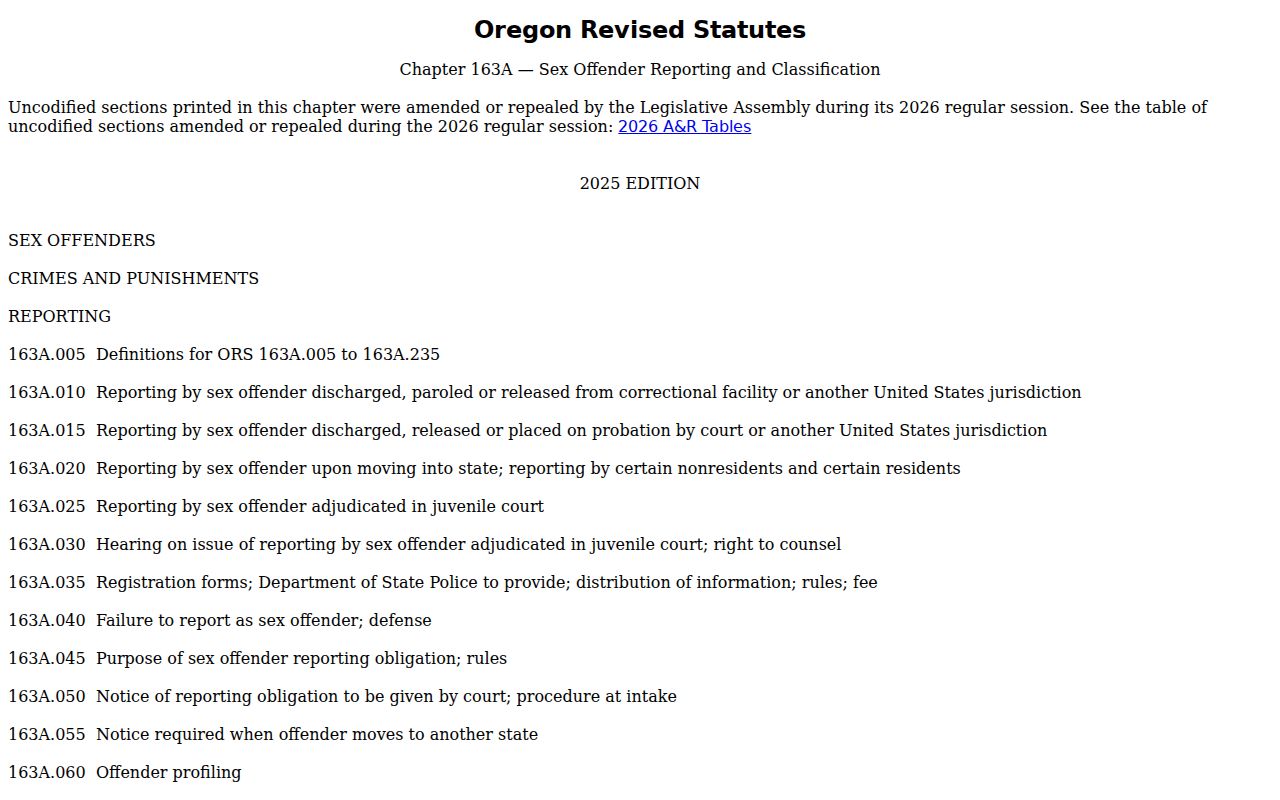
The statute source shows why a registry profile cannot answer every question about duration or possible relief.
Cross-State Klamath Registry Searches
Klamath County sits near California, so a county-only Oregon filter may be too narrow for a cross-border safety question. The U.S. Department of Justice operates the National Sex Offender Public Website, or NSOPW, as a search layer across participating jurisdictions. It is useful when a route, former address, or family concern crosses state lines.
The official NSOPW search does not erase the limits of each contributing jurisdiction. Oregon still controls which Oregon records are public, and California applies its own rules.
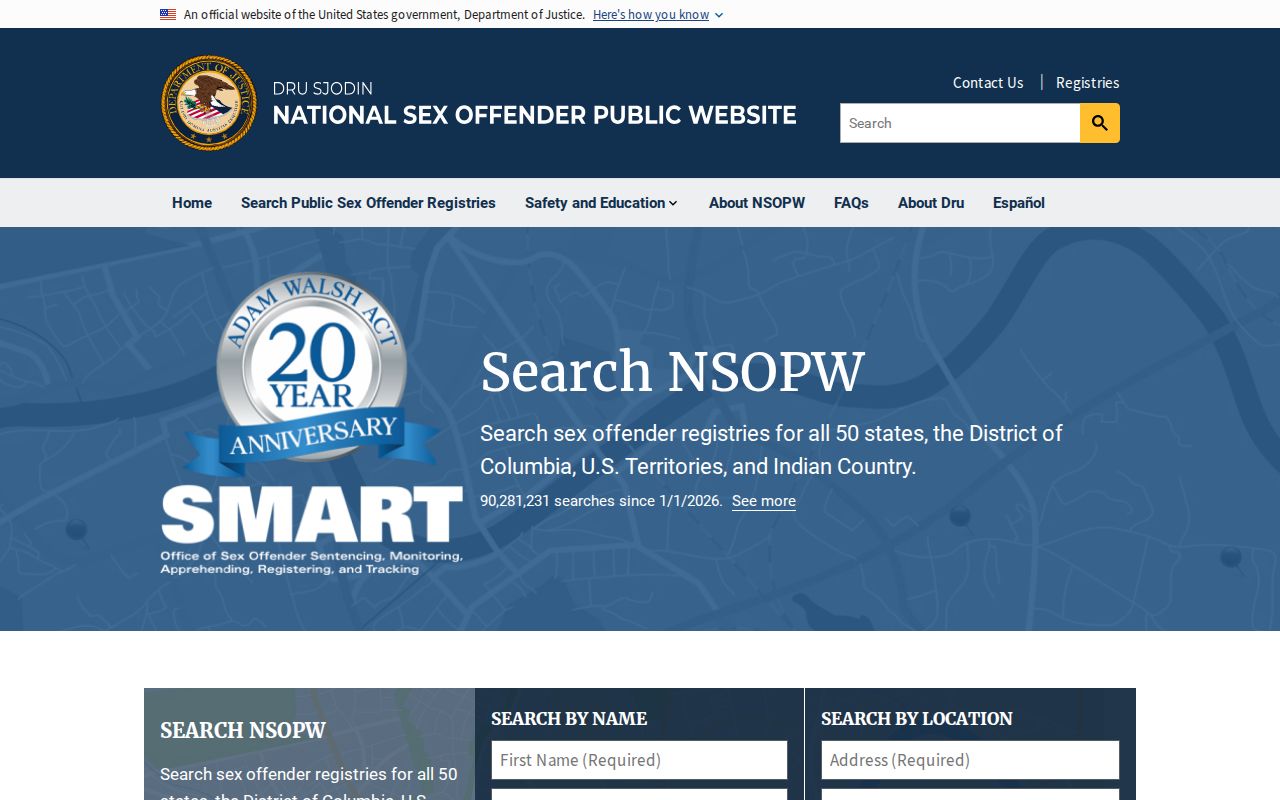
The national interface broadens geography while leaving source-state disclosure rules intact.
When a search produces a possible record outside Oregon, follow the source link to that jurisdiction and read its definitions. A level number, visibility rule, or relief date may mean something different there. NSOPW is best treated as a routing layer, while the participating state or territory remains the source for the displayed record. If personal safety is at immediate risk, use law enforcement rather than waiting for a portal update or an email subscription.
Community Notification and Lawful Use
Registry data supports awareness and sound safety planning. Readers can compare a published location with a route, subscribe to changes, or contact law enforcement about a possible stale Klamath County address. Alleged reporting violations go to local law enforcement. OSP also identifies Sexoffender.Questions@osp.oregon.gov for questions about possible address problems.
Oregon does not supply a blanket statewide school or park distance rule in the official material reviewed. Do not invent one or treat a map radius as a legal boundary. The map is a search tool. Any location restriction must come from the law or order that actually applies.
Possible stale addresses deserve a factual report, not public confrontation. Note the profile, the date viewed, and the specific discrepancy, then give that information to KCSO, OSP, or the state registration section. Officials can compare it with nonpublic reporting data and decide what follow-up is lawful. Public users should not attempt surveillance, publish accusations, or contact a listed household. Those acts can put bystanders at risk and interfere with official compliance work.
Registry misuse is unlawful: ORS 163A.215 warns that using registry information to injure, harass, or commit a crime can bring prosecution and civil action.